“Another Encounter with the Light”: Manasijeski Fills Uranija Gallery with Art, Emotions and Spirituality
06.09.26 13:12
The gallery space of the House of Uranija – MANU last night was too small for the numerous admirers of Jordan Manasijeski’s art, fellow artists from the country and abroad, friends and guests who came to the opening of his exhibition “Another Encounter with the Light”.
Original works created in the last two years were displayed in the specific ambiance of Uranija – a new chapter in Manasijeski’s creative path in which light, spirituality, infinity and human existence are once again intertwined in the recognizable artistic language of the Ohrid artist.
The location of the exhibition also had its own symbolism. It was in Uranija, 35 years ago, in 1991, that Manasijeski’s exhibition activities began, before his works continued their journey to the great world art centers. This was recalled by Ljupco Zupan from the “Bucephalus” Gallery at the opening of the exhibition that took place on the plateau in front of the Lapidarium.
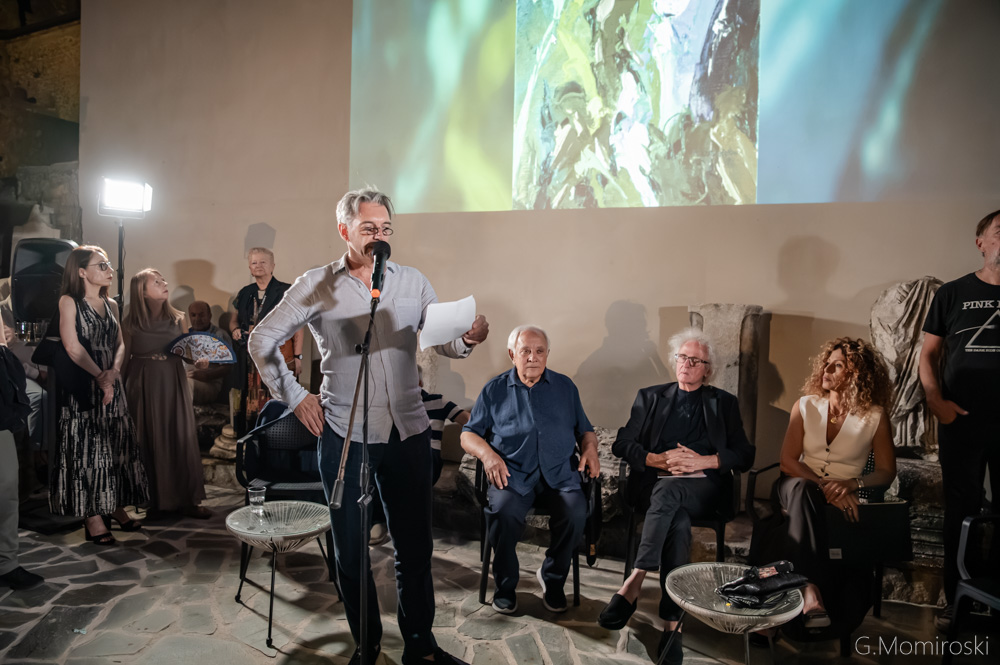
Zupan, right at the beginning, in one sentence, perhaps most simply described the essence of what the audience had the opportunity to see.
His work does not ask to be seen – it asks to be felt, said Zupan, pointing to the exceptional creative sensibility and recognizable personal language of Manasijeski, whose reputation has long since transcended the borders of Macedonia.
He also recalled part of the artist’s international journey – the nomination for the Grand Prix at the Salon d’Autumn in Paris, the recognition from the Japanese Association for Contemporary Art in Tokyo, the presentations in New York, Palermo, Verona and Florence, the award at the Biennale of Nations in Venice, “Michelangelo”, as well as the selection in the publication “The Great Masters of Contemporary Art” in Rome.
On behalf of the Municipality of Ohrid, the audience was addressed by artist and member of the Municipal Council, Natasha Poposka Karche, who recognized the connection between Ohrid, light and spirituality in Manasijeski’s work.
According to her, behind his art there is a “powerful, yet silent element” in which modesty and strength, warmth and love and the spiritual dimension of human existence simultaneously live. It is no coincidence, she said, that it is precisely in Ohrid – the city of light and spirituality – that art is created that constantly looks towards invisible spaces.
This evening is not just another exhibition, but an encounter with one of the living treasures of our city, Poposka Karche emphasized, adding that Manasijeski does not paint the subject matter, but “shapes the light with all its colors and symbols.”
A unique literary and philosophical dimension was given to the evening by the writer, poet and diplomat Jordan Plevneš, who titled his address “Ode to Jordan Manasieski: Between the Painting of Ohrid and the Infinity of World Painting”.
Plevneš traced Manasieski’s creative path from Lychnidos – the city of light, to Paris, Tokyo, New York, Florence, Verona and Venice, assessing that his imagination moves “from material mystery to celestial symphony”.
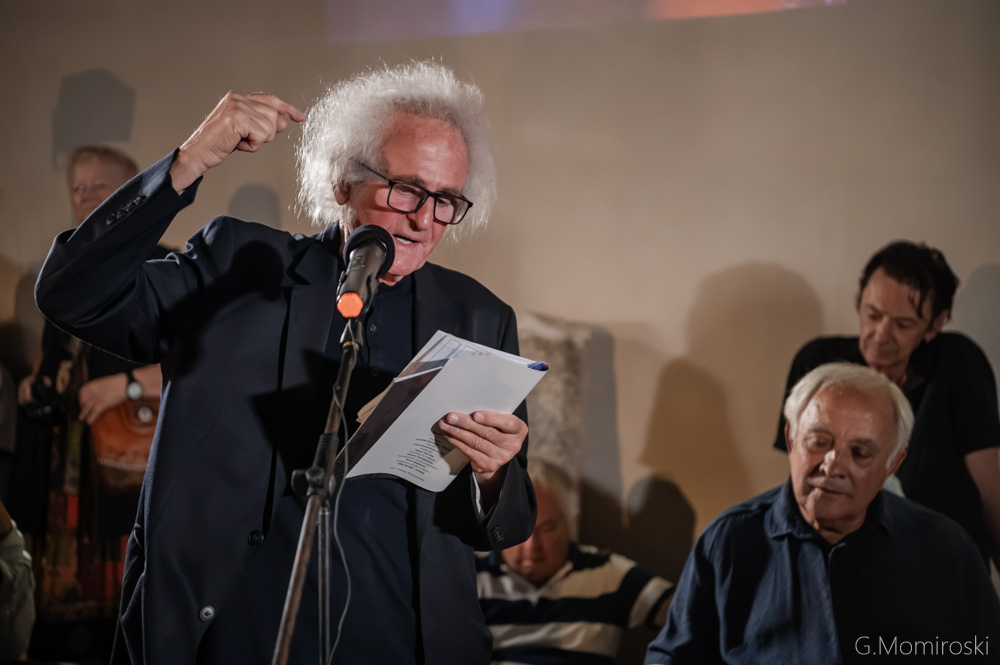
In his recognizable poetic style, he called the exhibition in Urania a “miracle”, connecting Manasieski’s creative world with Michelangelo and the idea of ??art as a trace that outlives time.
Jordan Manasieski is a painter of the light of immortality, said Plevneš at the end of his address, inviting the audience to feel eternity in his works.
The most personal and emotional moment of the evening, however, came from the author himself. Jordan Manasijeski did not speak for long. As he said – what he had to say, he had already said through the pictures.
I have said it in my works. In fact, they are not my works – they are works sent, I feel, by the light from heaven, said Manasijeski.
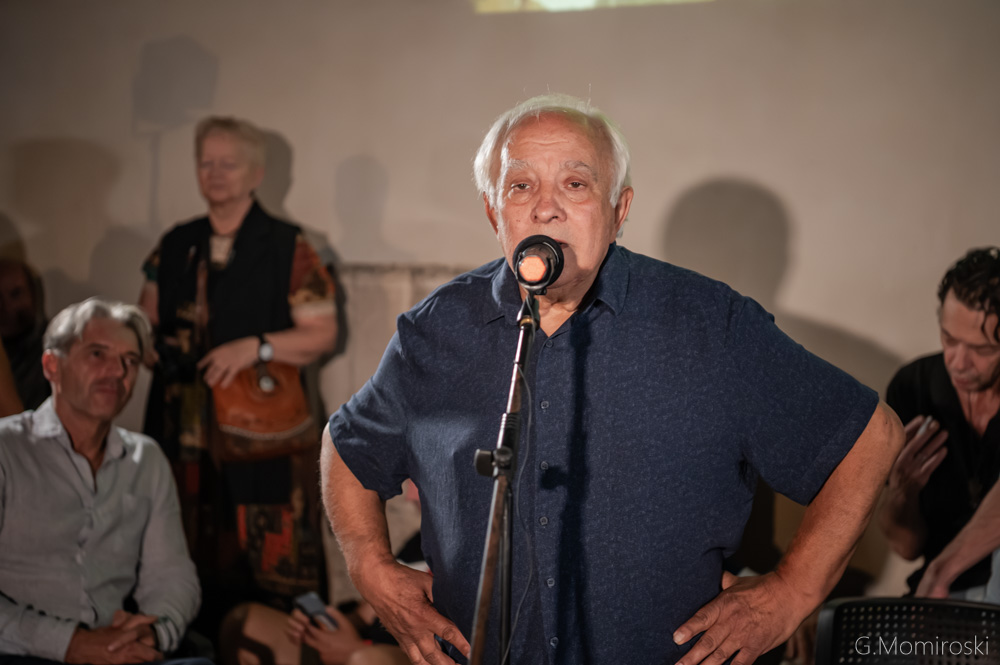
Surrounded by people who have been following his work for years, he said that that evening he felt everyone present as one family and that he wanted to share with them the joy that permeates “our seeing and not seeing from the past, now and in the future”.
For Manasijeski, light is not only an artistic element, but also a way of understanding life.
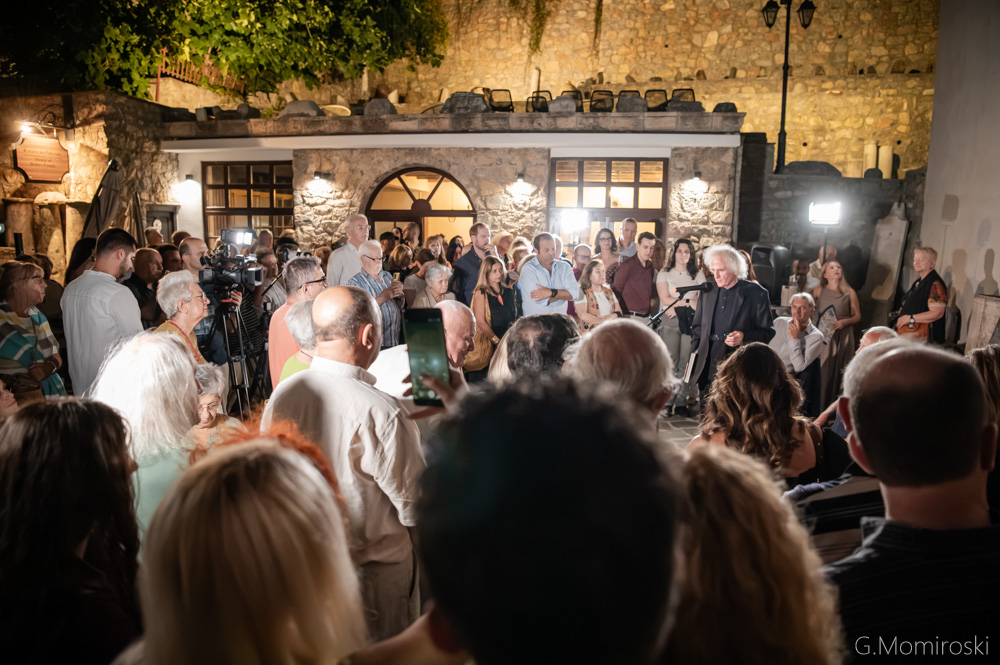
I am not saying that we are eternal, but our soul is eternal… Every day should be our light, our happiness, our joy and our gratitude, the artist said.
A special moment was the presentation of Manasijeski’s latest monograph to Jordan Plevneš, with a personal dedication that Plevneš, visibly excited, read to the audience. He assessed that Manasijeski, in addition to the power of his pictorial expression, also possesses the “power of words”.
The opening was also to be attended by art historian Vlado Gjoreski – Rafik, who was prevented from arriving in Ohrid for justified reasons. His critical review, however, provides a significant additional perspective on Manasijeski’s oeuvre.
Rafik believes that Manasijeski has been positioning Macedonian art on a high creative and spiritual position for more than half a century, and defines his visual art as a kind of “pure light extract”.
It is not just painting, it is a deep dive into all invisible spectra of light, writes Gjoreski, adding that through Manasijeski’s works, time, space, existence and the spirit of the universe are revealed.
Manasijeski is not just a painter, he discovers the Universe through painting, says Gjoreski, assessing that his works already surpass art understood only as an aesthetic and creative act.
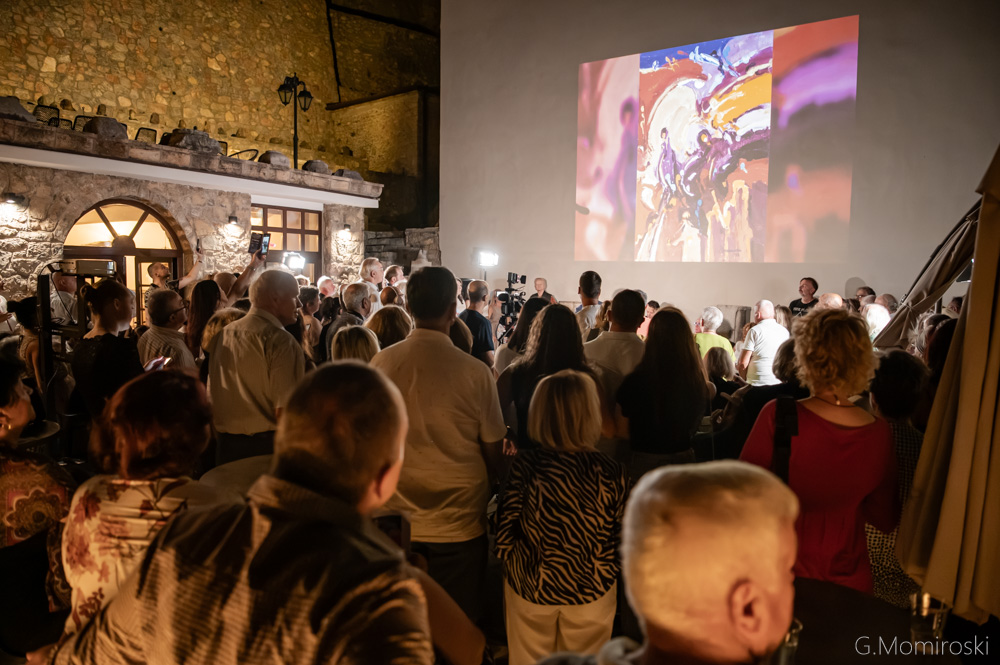
The exhibition in Uranija comes after more than half a century of Jordan Manasijeski’s work. Last year, when he celebrated 55 years of artistic work, he was also the recipient of the OhridNews Lifetime Achievement Award for 2025.
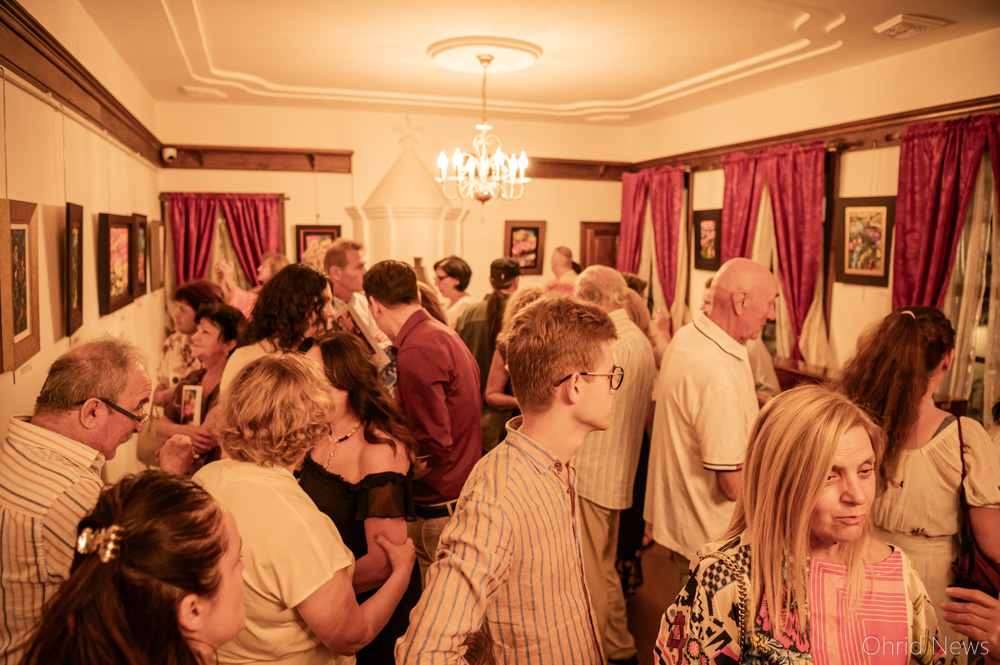
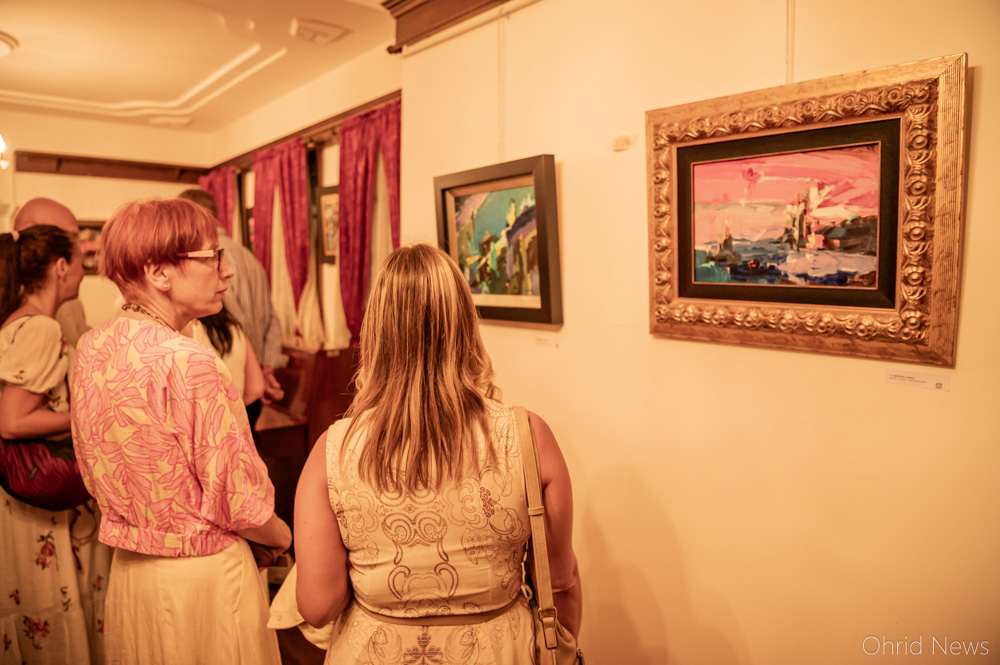
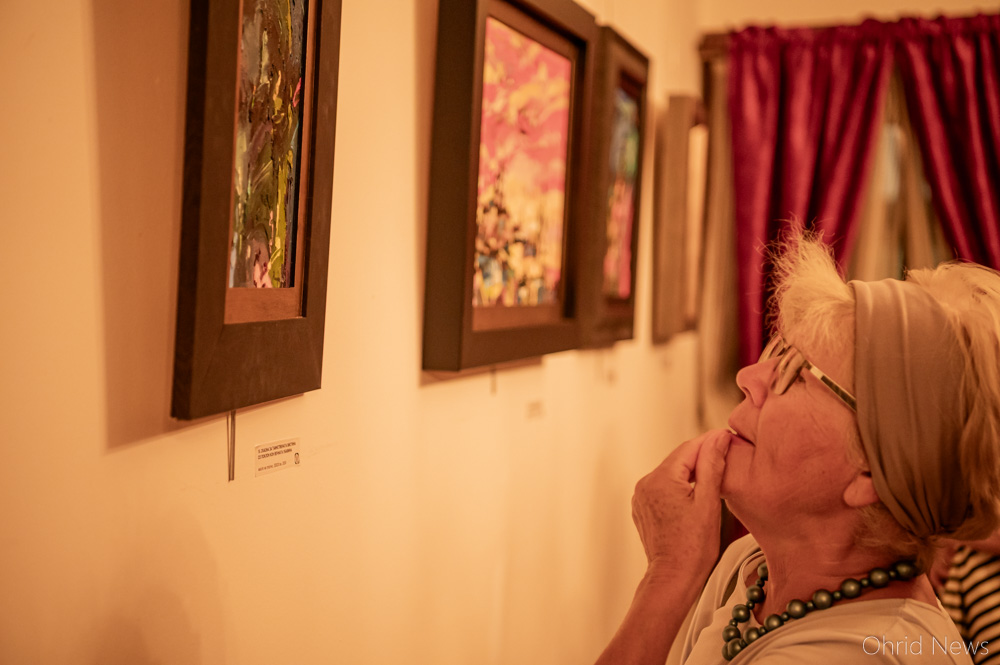
And 35 years after his exhibition journey began precisely in Uranija, Manasijeski returned to the same space again. This time with works from his latest, as pointed out at the opening, “celestial period” – and with another encounter with light.
tags #art #jordanmanasijeski #ohrid #artgallerybukefal #manu #modernart
