EXHIBITION

“Another Encounter with the Light”: Manasijeski Fills Uranija Gallery with Art, Emotions and Spirituality
06.09.26 13:12

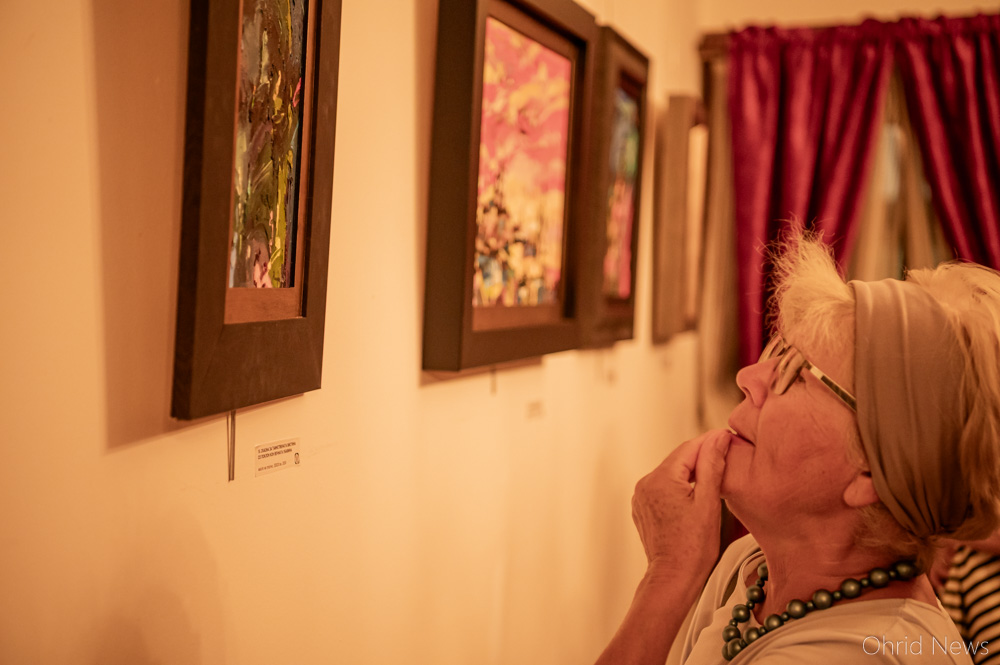
The gallery space of the House of Uranija – MANU last night was too small for the numerous admirers of Jordan Manasijeski’s art, fellow artists from the country and abroad, friends and guests who came to the opening of his exhibition “Another Encounter with the Light”.
Original works created in the last two years were displayed in the specific ambiance of Uranija – a new chapter in Manasijeski’s creative path in which light, spirituality, infinity and human existence are once again intertwined in the recognizable artistic language of the Ohrid artist.

The location of the exhibition also had its own symbolism. It was in Uranija, 35 years ago, in 1991, that Manasijeski’s exhibition activities began, before his works continued their journey to the great world art centers. This was recalled by Ljupco Zupan from the “Bucephalus” Gallery at the opening of the exhibition that took place on the plateau in front of the Lapidarium.
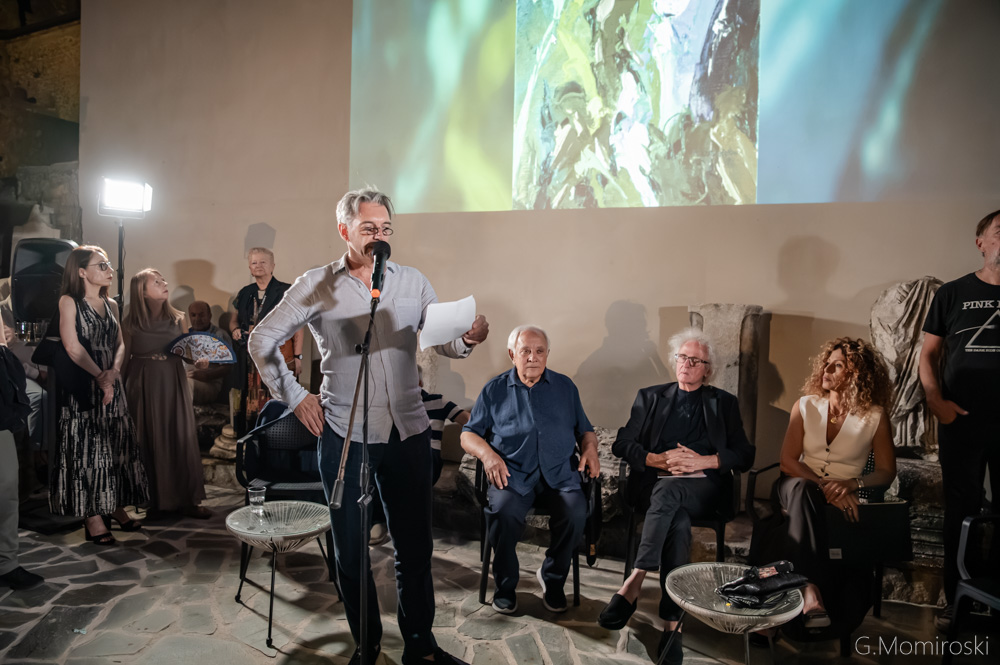
Zupan, right at the beginning, in one sentence, perhaps most simply described the essence of what the audience had the opportunity to see.

His work does not ask to be seen – it asks to be felt, said Zupan, pointing to the exceptional creative sensibility and recognizable personal language of Manasijeski, whose reputation has long since transcended the borders of Macedonia.

He also recalled part of the artist’s international journey – the nomination for the Grand Prix at the Salon d’Autumn in Paris, the recognition from the Japanese Association for Contemporary Art in Tokyo, the presentations in New York, Palermo, Verona and Florence, the award at the Biennale of Nations in Venice, “Michelangelo”, as well as the selection in the publication “The Great Masters of Contemporary Art” in Rome.

On behalf of the Municipality of Ohrid, the audience was addressed by artist and member of the Municipal Council, Natasha Poposka Karche, who recognized the connection between Ohrid, light and spirituality in Manasijeski’s work.

According to her, behind his art there is a “powerful, yet silent element” in which modesty and strength, warmth and love and the spiritual dimension of human existence simultaneously live. It is no coincidence, she said, that it is precisely in Ohrid – the city of light and spirituality – that art is created that constantly looks towards invisible spaces.

This evening is not just another exhibition, but an encounter with one of the living treasures of our city, Poposka Karche emphasized, adding that Manasijeski does not paint the subject matter, but “shapes the light with all its colors and symbols.”

A unique literary and philosophical dimension was given to the evening by the writer, poet and diplomat Jordan Plevneš, who titled his address “Ode to Jordan Manasieski: Between the Painting of Ohrid and the Infinity of World Painting”.

Plevneš traced Manasieski’s creative path from Lychnidos – the city of light, to Paris, Tokyo, New York, Florence, Verona and Venice, assessing that his imagination moves “from material mystery to celestial symphony”.

In his recognizable poetic style, he called the exhibition in Urania a “miracle”, connecting Manasieski’s creative world with Michelangelo and the idea of ??art as a trace that outlives time.

Jordan Manasieski is a painter of the light of immortality, said Plevneš at the end of his address, inviting the audience to feel eternity in his works.

The most personal and emotional moment of the evening, however, came from the author himself. Jordan Manasijeski did not speak for long. As he said – what he had to say, he had already said through the pictures.
I have said it in my works. In fact, they are not my works – they are works sent, I feel, by the light from heaven, said Manasijeski.

Surrounded by people who have been following his work for years, he said that that evening he felt everyone present as one family and that he wanted to share with them the joy that permeates “our seeing and not seeing from the past, now and in the future”.

For Manasijeski, light is not only an artistic element, but also a way of understanding life.
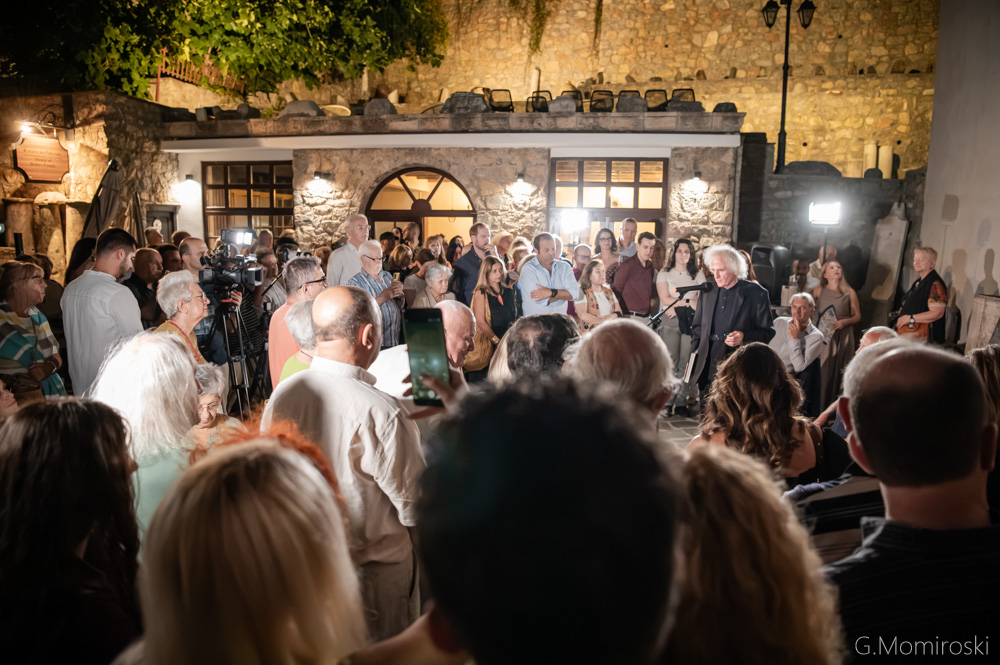
I am not saying that we are eternal, but our soul is eternal… Every day should be our light, our happiness, our joy and our gratitude, the artist said.

A special moment was the presentation of Manasijeski’s latest monograph to Jordan Plevneš, with a personal dedication that Plevneš, visibly excited, read to the audience. He assessed that Manasijeski, in addition to the power of his pictorial expression, also possesses the “power of words”.

The opening was also to be attended by art historian Vlado Gjoreski – Rafik, who was prevented from arriving in Ohrid for justified reasons. His critical review, however, provides a significant additional perspective on Manasijeski’s oeuvre.

Rafik believes that Manasijeski has been positioning Macedonian art on a high creative and spiritual position for more than half a century, and defines his visual art as a kind of “pure light extract”.

It is not just painting, it is a deep dive into all invisible spectra of light, writes Gjoreski, adding that through Manasijeski’s works, time, space, existence and the spirit of the universe are revealed.

Manasijeski is not just a painter, he discovers the Universe through painting, says Gjoreski, assessing that his works already surpass art understood only as an aesthetic and creative act.
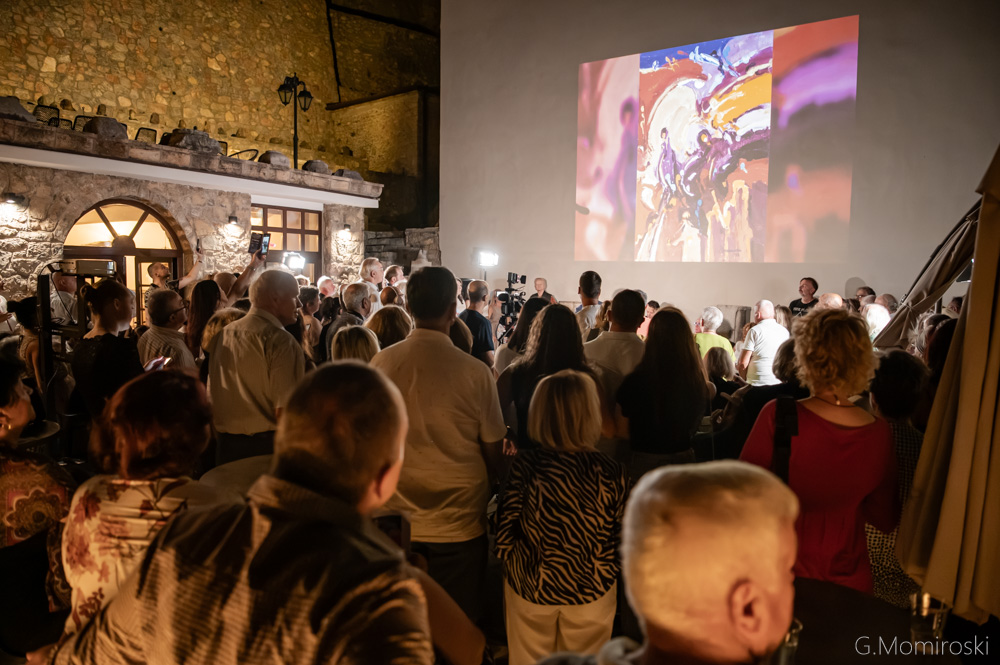
The exhibition in Uranija comes after more than half a century of Jordan Manasijeski’s work. Last year, when he celebrated 55 years of artistic work, he was also the recipient of the OhridNews Lifetime Achievement Award for 2025.
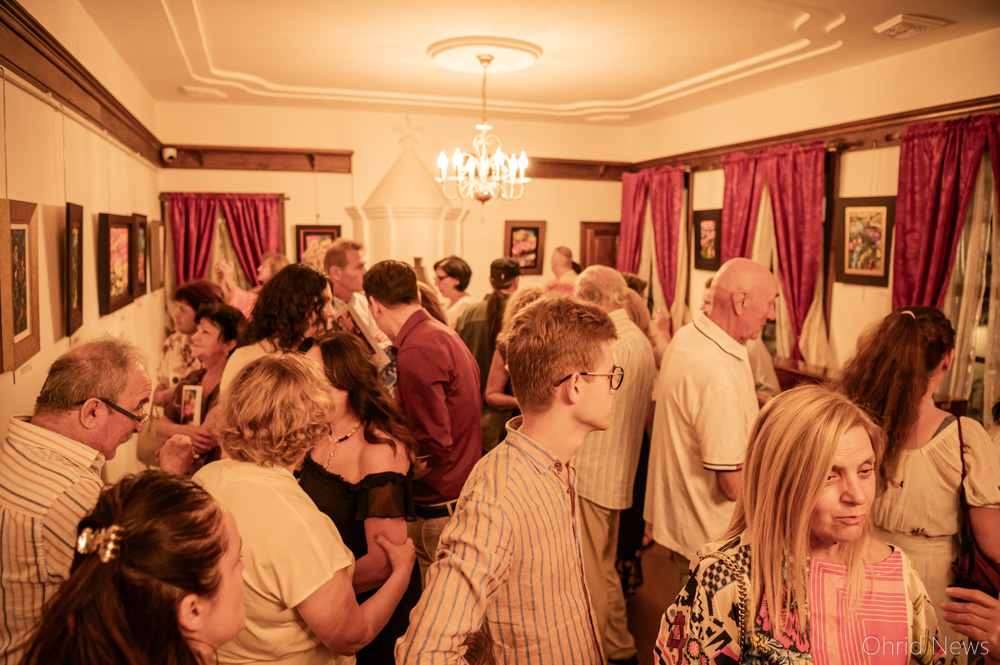
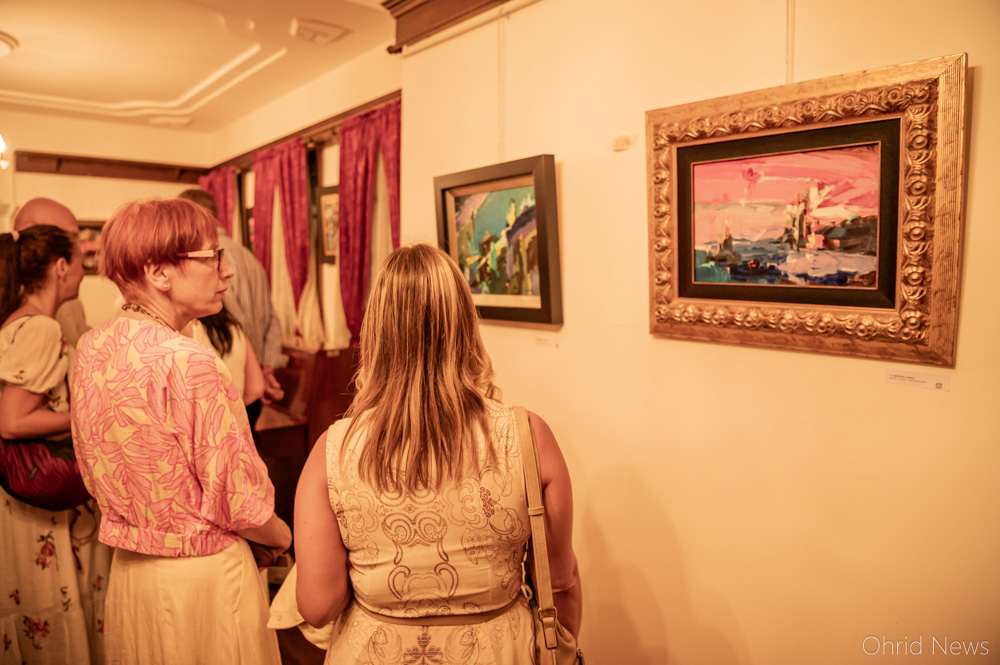
And 35 years after his exhibition journey began precisely in Uranija, Manasijeski returned to the same space again. This time with works from his latest, as pointed out at the opening, “celestial period” – and with another encounter with light.

tags #art #jordanmanasijeski #ohrid #artgallerybukefal #manu #modernart

Jordan Manasijeski – Umjetnost iz božanskih prostora

By

 Atma

 –   11. travnja 2025.

https://atma.hr/jordan-manasijeski-umjetnost-iz-bozanskih-prostora/?fbclid=IwY2xjawJmNXxleHRuA2FlbQIxMQABHgNa2BcTnP30perhK16i7srrtF9yJdVk2qHcdkfYrG5uB-vux0FY9mRG-Aog_aem_gpy4QUgkFpk5DZz6XZ2XGA#google_vignette

“This is painting that begins where man’s longing for the fuller meaning of life ends, that is, where religion, philosophy, and morality meet at the highest artistic level. This is painting on higher intensity. ”

“Ovo je slikarstvo koje pocinje tamo gdje završava žudnja covjeka za potpunijim smislom života, odnosno gdje se religija, filozofija i moralnost susrecu na najvišoj razini umjetnickog. To je slikarstvo na višoj potenciji.”

“Naša civilizacija utemeljena je na logici i razumu. Pa tako i mi, njezini baštinici i „konzumenti“ upravljamo njome i svojim životima svjesno, vo?eni spoznajom, a suoceni s gotovo svakodnevnom ekspanzijom znanosti i tehnologija koje nam tobože pomažu da se oslobodimo iskonskog straha, onog koji proizlazi iz naše nemoci da pojedina stanja i pojave spoznamo i kontroliramo. No, strah od nepoznatog i strah za vlastitu egzistenciju oduvijek nas je tjerao da odgovore tražimo negdje drugdje, „ s onu stranu“ – u iracionalnom i podsvjesnom. U tom prijelazu iz svjesnog u nesvjesno, iz poznatog u nepoznato, oduvijek su nam pomagali posebni transmiteri.

Naime, naša podsvijest ne prepoznaje rijeci, ali prepoznaje simbole – oblike kojima iz razine svjesnog komuniciramo s nesvjesnim. Ti vizualni transmiteri mocno su orudze koje nam olakšava komunikaciju, jer se jezik podsvijesti sastoji od slika. A što je slika vizualno snažnija to je i njihovo djelovanje na nesvjesni um jace. A u podsvijesti kao skladištu svih naših emocija trajno su pohranjena sva naša iskustva i sjecanja. No, podsvijest ne razlikuje maštu od onog što se dogadza izvan naših misli. Jedina realnost koju priznaje naše su emocije. Stoga je pomocu njih jedino možemo i probuditi. Ta potreba za budzenjem podsvijesti, potreba je za odgovorima koje ne pronalazimo na razini svjesnog, a posljedica su covjekove nesigurnosti i straha protiv kojih smo se stoljecima borili stvarajuci snažnu, razumom vodzenu civilizaciju.

Umjetnosti koja se i radza na tom prijelazu svjetova, umjetnosti kojoj pripada slikarstvo Jordana Manasijeskog. Slikarstvo poput najvjernijeg posrednika izmedzu ljudskog i Božjeg, zemaljskog i Božanskog. I dugo vec ne vidjeh vjernijeg poslanika i boljeg tumaca njegove morfologije i metaforike od Jordana Manasijeskog. Jer njegovo slikarstvo prožeto je dubokom ljubavlju prema bližnjem i cežnjom za konacnim kozmickim pomirenjem. Predstavlja otkrivenje u najcišcem i najplemenitijem stanju, pronalazeci traženi ekvivalent u vlastitom duhovnom iskustvu.

U njegovim slikama nema ni frustracije ni patnje, vec je sve ispunjeno radošcu i hipnotizirajucom privlacnošcu. To je slikarstvo koje pocinje tamo gdje završava žudnja covjeka za potpunijim smislom života, odnosno gdje se religija, filozofija i moralnost susrecu na najvišoj razini umjetnickog.

To je slikarstvo na „višoj potenciji“. Slikarstvo povišenog raspoloženja, u kojem bujaju oblici, unutar kojega sve podjednako živi kao u nekoj slikarskoj osmozi, cvrsto povezanih pulsirajucih formi i napregnutih cistih boja -dubokih i zasicenih, reskih i žestokih. Usudila bih se tu koloristicku raskoš pripisati udjelu autorove duhovnosti, njegove povišene emotivnosti i imaginacije, upravljenih ka dubljim spoznajama istine.”

Povjesnicar umjetnosti Sanda Stancev Bajzek

Istina je ispred estetike

O porukama koje prenosi kroz svoju ruku, svoj izraz, Jordan Manasijeski kaže da su plodovi misli koja ga vodi; on je samo produženo djelovanje sile koja sve stvara… Njegove slike nisu velikih dimenzija, a kako sam kaže: „Do duhovnosti se dolazi i s jednom svijecom, ne s reflektorima“…

„Slikarstvo koje prenosim cisto je asocijativno, ekspresivno, u njemu se ispreplicu i povezuju razliciti pojmovi iz prošlosti, sadašnjosti i buducnosti. Individualna je odlika pojedinca i njegovih genetskih sposobnosti može li te pojmove urezati u svoju misao. Usporedba dobra i zla, uspjeha i neuspjeha – asocijativne su suprotnosti, ali dijelovi cjeline. Dobro je ako covjek uspije probuditi te asocijativne odnose u sebi“, izjavio je Manasijeski.

Ljudska misao doseže razlicite razine… Kada covjek doživi katarzu, vec iskljucuje svoj osobni interes i proracunat pecat. Procišceni ljudi brišu ego iz svojih djela, a kroz stvaralaštvo mogu dotaknuti druge dimenzije, prostore… cak i kroz tišinu mogu se osjetiti drugi prostori u kojima on vec živi i stvara… Tamo pojedinac nema potrebu prejedati se, puno govoriti, dodvoravati se… Možda zvuci cudno jer je sve navedeno suprotno svakodnevnom pragmatizmu, ali velika je radost dosegnuti to stanje duševnog mira. Privilegija je kada nam je dana mogucnost promišljanja, kaže Manasijeski.

Radost za umjetnika je trenutak kada uspije kroz ljudski duhovni segment procitati dio teško dostupnih prostora…

Duhovni svijet je milovanje pri kojem se osjeca ruka koja miluje, voda koja procišcava – nešto što se ne može opisati ni rijecima ni materijom, to je blagoslov… Iskrena duša teško se otvara ako ne postigne procišcenje, kaže, izmedzu ostalog, Manasijeski.

Zahvaljujuci velicini i skromnosti koju nosi u sebi, ovaj covjek predodredzen je da ostavi velika djela covjecanstvu, ne zloupotrebljavajuci pritom sposobnost velikog umjetnika da na stvari gleda kratkorocno, vec žrtvujuci se ne praveci kompromise sa svakodnevicom.

Posjeduje energiju koja, pretocena kroz boju na platnu, ostavlja poruke i simbole koji svojim zracenjem vibriraju božanskom energijom, suprotstavljajuci se svim negativnim frekvencijama iz okoline.

Istina je ispred estetike – prave vrijednosti na prvi pogled ne mogu se jasno percipirati, osobito u ovom vremenu komercijalne propagande materijalnih vrijednosti, gdje je mentalna granica razmišljanja pojedinca svedena na vrlo niske razine. Zbog toga ce neke istinske vrijednosti ovog vremena biti prepoznate tek u drugom buducem vremenu koje ce neminovno doci.

Njegove slike predstavljaju utjelovljenje božanske promisli, materijalizaciju misli koja se u odredzenim vremenskim periodima prenosi kroz frekvencije ostavljajuci poruke buducim generacijama. Ocekivano je da ih se može procitati iz stanja više svijesti, jer predstavljaju znakove i poruke iz viših dimenzija nesvjesnih prostora.

Rijec je o arhetipskom slikarstvu kakvo se može ocekivati od umjetnika cistog srca i duše, dostojan da  prenosi svoju inventivnu intuiciju, inteligenciju i genetsko pamcenje.

Više o Jordanu Manasijeskom

Jordan Manasijeski akademski je slikar koji živi i stvara u Ohridu. Diplomirao je na odsjeku za likovnu umjetnost Pedagoškog fakulteta 1969. godine u klasi Vangela Kodžomana. Njegove slike sve više privlace pozornost svjetskih umjetnickih centara te likovne kritike. Njegova umjetnicka djela postojano su dio svjetske umjetnicke elite na izložbama u Parizu, Rimu, Londonu, New Yorku, Firenci, Tokiju, Vatikanu…

Medzunarodna promocija Manasijeskog zapocinje 2009. godine na Jesenskom salonu u Parizu, gdje je nominiran za nagradu „Grand Prix“ salona.

Godine 2010. izlaže na izložbi „Veliki umjetnici sutrašnjice“ u muzeju Louvre. Clan je Japanske asocijacije za suvremenu umjetnost. Na 8. Bijenalu u Firenci izlaže sliku Vizija radosti.

Njegova biografija objavljena je u specijaliziranoj umjetnickoj enciklopediji „Tko je tko“ za 2013. godinu, kategorizirajuci ga kao umjetnika koji ostavlja trajnu vrijednost i kvalitetu na podrucju slikarstva. Svjetska kritika smješta ga medzu najreprezentativnije svjetske umjetnike današnjice.

Godine 2015. na Art salonu „Spektrum“ u Miamiju, koji otkriva djela koja unose novine u svjetsko slikarstvo, Manasijeski dobiva posebnu nagradu za nove dosege u slikarstvu.

Ohridski umjetnik dobitnik je nagrade Michelangelo povodom 500-godišnjice skulpture Mojsije, koju mu dodjeljuje talijanska kritika, kao i nagrade žirija na Biennalu nacija u Veneciji 2018. godine.

Godine 2020. uvršten je u enciklopediju Veliki majstori suvremene umjetnosti. Više o njegovom slikarstvu možete procitati na njegovoj web stranici www.jordanmanasijeski.com

„Umjetnik cije vizije postavljaju temelje nove suvremene umjetnosti.“

To su rijeci svjetski poznatog talijanskog kriticara Salvatorea Russa kojima definira umjetnicki izraz makedonskog slikara Jordana Manasijeskog. Russo, cije su kritike objavljene u najpoznatijim svjetskim umjetnickim enciklopedijama, za Manasijeske slike kaže da posjeduju iznimnu snagu prenošenja poruke, kreativnu energiju, dinamiku stati?nog koje nikada ne miruje… Njegove slike istražuju misterije uma, prateci i vizualizirajuci njegov diktat. Ogromna sinteza znakova, nadogradzena precizno odabranim kromatizmom…

Manasijeski uspijeva u teškom zadatku oblikovanja svjetlosti. Svjetlost je to koja poprima beskrajne nijanse znakova i boja. Njegov modus operandi iznimno je važan. Majstor je sposoban vratiti red u stvari.

Znak više nije osudzen da luta prazninom, on više nije “apatrid” na nicijoj zemlji. Napokon pronalazi svoje novo državljanstvo na platnu na kojeg su smještene najljepše price iz svijeta Jordana Manasijeskog.

Svijet u kojem magla nestaje, ostavljajuci prostor za beskrajnu ljepotu boje i njezinu magiju na platnu.

Zato je Manasijeski umjetnik s izrazito traženom vizualnom poetikom. Njegove analize i neprekidna eksperimentiranja dovode ga do velikog scenarija suvremene umjetnosti – što je doista važno! Scenarij koji ga danas postavlja medzu najvece svjetske suvremene umjetnike.

Pripremio: Ljupco Župan, galerist, umjetnicki menadžer i predsjednik Art Fondation Jordan Manasijeski, osnivac Galerije Bukefal (Ohrid), St.Kliment Ohridski 54

http://www.bukefal.com.mk/

www.jordanmanasijeski.com

https://atma.hr/jordan-manasijeski-umjetnost-iz-bozanskih-prostora/?fbclid=IwY2xjawJmNXxleHRuA2FlbQIxMQABHgNa2BcTnP30perhK16i7srrtF9yJdVk2qHcdkfYrG5uB-vux0FY9mRG-Aog_aem_gpy4QUgkFpk5DZz6XZ2XGA#google_vignette

Promotion of the Monograph Jordan Manasijeski at MANU

At the Macedonian Academy of Sciences and Arts (MANU) Art exhibition hall, a significant event, promotion of the monograph Jordan Manasijeski authored by prof. Dr. Vladimir Velichkovski, happened today in the presence of a distinguished audience, including foreign guests and members of the diplomatic corps in Macedonia.The inaugural address was delivered by the president of MANU, Academician Ljupcho Kocarev, the promoter prof. Dr. Ivica Djeparovski, Ljupco Zhupan from Bukefal gallery, the organizer of the event, and prof. Dr. Vladimir Velichkovski, the author of the monograph.

This substantial work spans 480 hardcover pages and boasts more than 300 color reproductions, accompanied by bilingual text in Macedonian and English. It features critical reviews from various prominent art historians: Salvatore Russo – Italy, Ruthie Tucker – USA, Sanda Stanachev Bayzek – Croatia, Dragan Jovanovi? Danilov – Serbia, Bisera Valeva – Bulgaria and Macedonian critics and lovers of art Nikola Nikolovski, Zekman Rakipovski, writers Kiro Donev, Trajan Martinovski and journalist Milcho Jovanoski.

This edition serves as an epilogue to Manasijeski’s extensive artistic journey so far, documenting events from both the domestic and international art scene including promotions, exhibitions, participation in International Art Salons for modern art and received awards. A significant focus is also placed on his contribution to the world of comics, which has been a substantial part of his artistic career. The monograph also presents a glimpse into his vast portfolio showcasing a fraction of his over 2,000 creative design solutions. The preparation of the monograph lasted for more than 6 years, with technical and graphic design executed by Bobi Kjosev, while the editorial role was undertaken by Ljupcho Zhupan a longstanding advocate of Manasijeski’s work on the global stage.

In 2009, Manasijeski was honoured with the special drawing award of the Osten World Drawing Gallery. In 2010, he participated in the prestigious Big Stars of Tomorrow Salon, at the Louvre Museum in Paris, showcasing his painting Prayer for Joy, and earning a special award from the Japan Association for Contemporary Art. One of his most famous paintings Vision of Joy secured his victory with the jury at the Eighth International Biennale in Florence in 2011. That same year his painting Friends of Light was exhibited at ARTAGE in New York, as well as at the Charity Exhibition supporting children orphaned by the tsunami in Japan.

In the expressionist painting of this eminent artist, a profound sense of liberation from the constraints of reality is evident, marked by a crafted artistic manuscript. The artist’s expansive brushstrokes, evident across various motifs and settings, bear witness to his painterly depth—a testament to his intimate, internal evolution. Few painters can claim such a remarkable creative evolution in their creative endeavors. ‘Such an exhibition is a truly heroic act because he has absolutely succeeded surpassing himself’, says Prof. Dr. Vladimir Velichkovski about Manasijeski’s artistic career.

(Dalibor Stankovic , The text was published in print edition newspaper Nova Makedonia, November 22, 2023)

The Visual Poetics of the Charismatic Painter Jordan Manasijeski presented in a Comprehensive Monograph – Toni Dimkov

The monograph that was unveiled on November 22 in the art gallery of MANU in Skopje is a

significant work and a testament to the captivating creative endeavor of the Ohrid artist Jordan

Manasijeski.

The author of the monograph is the art critic Vladimir Velichkovski, the editoris the Ohrid

gallerist Ljupco Župan, and it was published by Jordan Manasijeski Art Foundation.The

president of MANU Ljupcho Kocarev, an academician, delivered a welcoming speech at the

book launch, and the promoter of the book at the event was prof. Dr. Ivica Djeparoski.

Jordan Manasijeski has dedicated his life and work to Ohrid, a city with a rich tradition that

includes contemporary art. He has been actively paintingsince 1985 and exhibiting since 1991.

Previously,he worked on graphic and shape design as an employee at Lihnida factory from

Ohrid. He dedicated much of his time to painting landscapes featuring Ohrid motifs, showcasing

both the lakeside and the old town architecture.

‘He is a member of the Ohrid landscapers, he has immersed him self in vibrant colors and

unrestricted movements, reaching a pinnacle in canvases painted since 2001.This period

marks a transformative journey, giving rise to imaginative landscapes characterized by the

dominance of light and a pursuit of an envisioned pristine world’, Vladimir Velichkovski has

pointed out.

“We are children of the sun, and love is the truth. Life unfolds as a sacred joy, a gift that

awakens emotions guiding us to reach the source of holy water and drink from the Eternal

Beauty of the heavenly spectrum and the Great Secret”, through multi-layered symbolism,

Jordan Manasijeski speaks about the inspirations behind his artistic creation.

‘Describing the paintings of Jordan Manasijeski is not an easy job with out an understanding of

his extensive body of work, as well as the charismatic, spiritually charged nature of his

individuality.His creativity, above all, emanates from his vision through which he authentically

and selflessly presents us with the primordial THOUGHT manifested in expressive use of the

color. Driven by his”vocation”, Jordan creates works of art using a vibrant palette rich in

mystical symbolism and a mysterious language of the subconscious. Through his art work, he

reveals to us his concern for the human soul and explores his own identity’, says Ljupco Župan,

owner of the Ohrid Bukefal gallery and editor of Jordan Manasijeski’s monograph.

It seems that the creativity and visual poetics of Manasijeski receives greater recognition abroad

than from the domestic art public. The renowned Italian curator and critic Dr. Salvatore Russo is

deeply impressed by Manasijeski’s paintings.

Very often I find my self pondering the question, who is a true artcritic? I have come to the

conclusion that time alone is the ultimate judge of art. Only time can discern the losers from

winners. In this context, the Macedonian artist Jordan Manasijeski deserves to be singled out.

He is an artist who places color and symbol at the core of his visual analysis.

Unlike his predecessors faced with informal painting, such as Pollock, Klein, Mathieu, Tapies,

SamFrancis, Jordan Manasijeski takes an innovative approach–skill fully integrating figures

into the informal structure. He delves into secret mysteries. Hamlet’s dilemmas, verbal

paradoxes, dialogue that transcends mere symbolism.A true tempest of lines and colours – as

notes by Russo.

Toni Dimkov

(The text was published in Kulturen Pechat number 206, in the printed edition of the newspaper

Sloboden Pechat on November 25-26, 2023)

Critical review

Inspired by Manasijeski’s latest paintings, the Italian art historian Dr. Salvatore Russo writes a critical review that will be published in the next publications Art International and in Mono-graphic issue for Jordan Manasijeski.

Jordan Manasijeski

 Who still thinks that art is essentially a question of beauty and respect for the rules: IS WRONG. Contemporary art, especially in recent years, breaks every kind of rule. Testimony of this, the latest New York exhibitions and our BIENNIAL. The “illuminated minds” seem to prefer an art that is a clear refusal of classical art. In this regard, it is sufficient to see the record prices of the American or London auctions, where Damien Hirst, Jeff Koons, Gerhard Richter and Yayoi Kusama are the main examples. Contemporary art is a battlefield. Every artist fights his personal war; each of them wants to conquer the scepter of power. That scepter that makes it eternal and brings it to history books. Very often I wonder who the real art critic really is. I have come to a conclusion: time is the true critic of art. Only time can decree the losers and the winners. In this context, the Macedonian artist Jordan Manasijeski deserves a special mention. An artist who puts color and sign at the center of his visual analysis. Unlike his predecessors who have been confronted with informal painting, I want to recall for example: Pollock, Kline, Mathieu, Tapies, Sam Francis, Jordan Manasijeski has a more innovative approach: capable of placing figures in the informal structure. Arcane mysteries. Hamletic doubts. Verbal paradoxes, dialogue beyond the sign. Real storms of lines and color. This is the scenario that the observer finds in front of him, observing the works of Manasijeski. Confessions of the soul. Authentic visions, which the artist, through his great expressive power, turns into a sign. The gesture is that of action painting. Jordan screams his truths on a canvas that becomes his life diary; a diary where to write the most significant memories and emotions. Over the years, I came across different informal realities. Realities that have not always left me with a positive “taste”. I must say that, instead, I find the informal world of Manasijeski, really interesting. A world that knows no limits, or illusory barriers; a world born from the mind of the artist, through an exquisite representative elegance. In the now eternal battle, begun with the birth of man, between darkness and light, in the works of the artist we find the great triumph of light. The darkness is brought into new contemporary paradises, and slowly they are transformed into light. The light is that of hope and change. I want to compare the artist’s creations to powerful volcanic eruptions. Eruptions that are characterized by the magmatic power with which the color invades, in my view in a completely legitimate way, the canvas, which turns into a real battlefield. A battle that the knights of light fight against armies dressed in shadow. A battle that has the final outcome, the triumph of an art that has the objective, that of narrating beauty, through real rainbows of light. Observing these works, we immediately realize the great harmony with which they are realized. Manasijeski succeeds in the difficult task of shaping the light. A light that takes on infinite shades of sign and color. The modus operandi of the artist is certainly of great critical importance. A Master able to restore the order of things. The sign, therefore, is no longer forced to wander in the void; it is no longer “stateless” in no-man’s land; but finally, it finds its new citizenship on a canvas that houses the most beautiful narratives in Jordan’s world. A world in which the fog disappears, to leave room for the infinite beauty of color and its magic on canvas. Manasijeski is therefore an artist with highly sought-after visual poetics. His analyzes and continuous experimentation are bringing him into the great scenario of contemporary art: what really matters. A scenario that places him today, among the greatest contemporary artists.


Salvatore Russo

Rome 15 June 2019

The great exhibition of Jordan Manasijeski in Museum Robevci

In the Museum “Robevci” Ohrid(one of the most impressive houses in the old town)runs an exhibition of Jordan Manasijeski (born in 1948), which is one of the few famous painters of Macedonia. In an authentic setting (in one part of space is a permanent exhibition of archaeological finds from Roman times) exposed paintings selected works of Manasijeski that was created in the last ten years. In the works with the title “Story of Holly spaces”(but each of them has its own name) is synthesized essential features and content of his painting. The author actually wanted to show to the audience’s attention on a particular aspect of individual spiritual experience.More info ( www.facebook.com/notes/galerija-bukefal/?????????-??????-???????????/552388888129936)